
Hart County Criminal Records
A Hart County criminal court record is the court case file kept after a criminal matter is opened in court. The Clerk of Superior Court identifies pending and closed criminal accusations and indictments as part of the clerk's record services. Those files can include the charging document, docket entries, bond orders, motions, hearing notices, plea documents, orders, disposition, sentencing papers, and probation terms. For a broader record-category view, use Hart County court records.
Superior Court is the main Hart County trial court for felony criminal cases. It sits in the Northern Judicial Circuit with Elbert, Franklin, Madison, and Oglethorpe counties. Magistrate Court handles important front-end criminal functions, including misdemeanor and felony warrants, first appearances, pre-warrant hearings, bond hearings, county ordinance violations, bad checks, and special misdemeanor charges. Probate Court may handle some traffic, gaming, and fishing matters. Municipal courts may handle city ordinance and citation matters.
The charge shown in a jail or booking record is not the same as a complete criminal court case. For the arrest-to-charge pathway, use Hart County arrest records and court charges. For current custody, use Hart County inmate records.
Search Hart County Criminal Cases
The main court-record custodian is the Hart County Clerk of Superior Court. Online access to Superior Court criminal and civil files is through the ICON case search login, which was visible in research as a login screen rather than an open public name search. The clerk's site says users can purchase yearly subscription access to the vendor ICON and should call 706-376-7189.
- Confirm that the case belongs in Superior Court, Magistrate Court, Probate Court, or a municipal court.
- For Superior Court cases, use ICON if login access is available or call the Clerk of Superior Court.
- Search or request by defendant name, case number, charge, filing date, or approximate court date when known.
- Read the docket for arraignment, motions, hearings, plea, verdict, disposition, and sentencing entries.
- Request a certified copy from the clerk if the record is needed for court, licensing, immigration, or formal proof.
The Northern Judicial Circuit District Attorney prosecutes state criminal cases in Hart and the other circuit counties. The DA is part of the case flow, but the DA's office is not the public record custodian for filed court case documents.
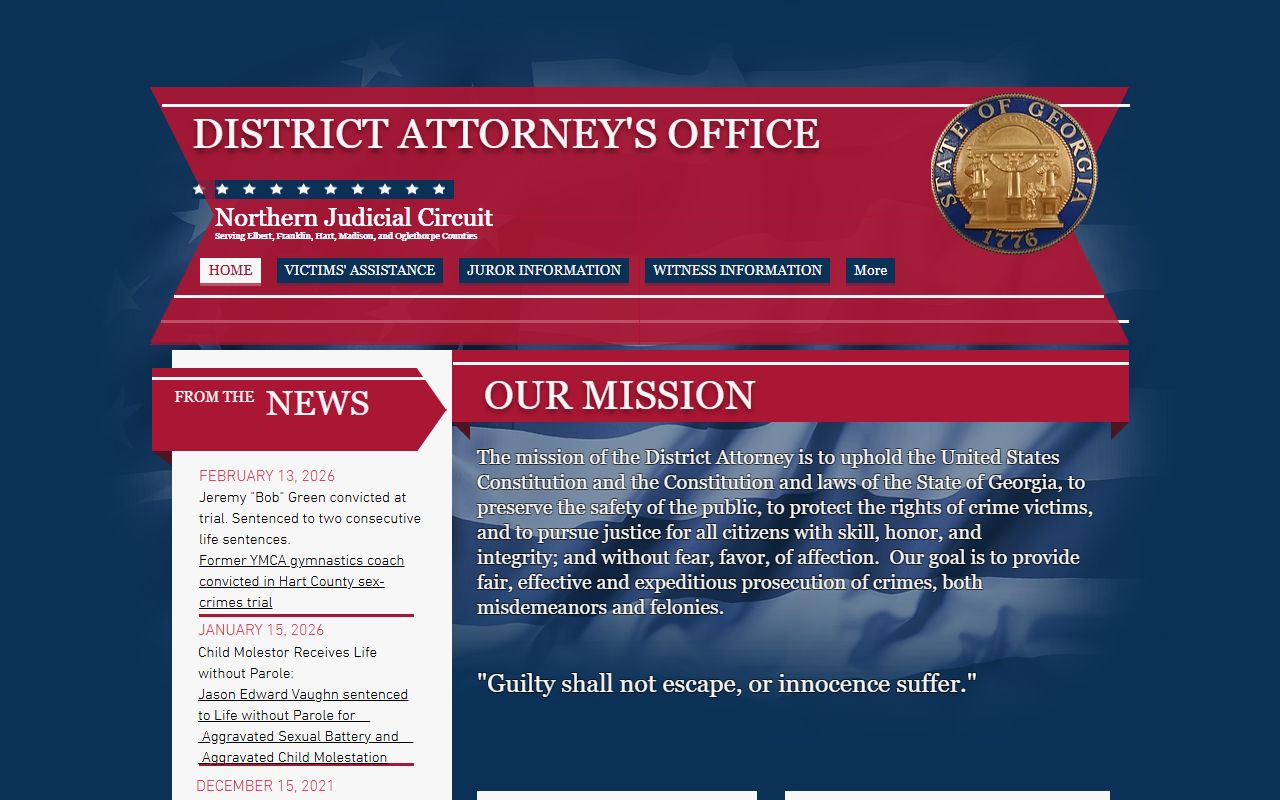
District Attorney activity can explain why a case moves from arrest or warrant activity into an accusation, indictment, plea negotiation, dismissal, trial, or sentencing entry.
Hart County Criminal Case Flow
Criminal court records build over time. A person may first appear in law-enforcement or jail records, then move through Magistrate Court for warrant, first appearance, or bond events, and later into Superior Court for felony prosecution. The court record becomes more complete as filings, hearings, orders, pleas, and dispositions are added.
Case flow: Charges Filed › Arraignment › Pretrial / Motions › Plea or Trial › Disposition › Sentencing
| Stage | What Happens |
|---|---|
| Charges Filed | An accusation, indictment, or other charging paper opens or advances the criminal court case. |
| Arraignment | The defendant is called before the court, advised of the charge, and a plea process begins. |
| Pretrial / Motions | The parties file motions, request rulings, exchange required information, and prepare for plea or trial. |
| Plea or Trial | The case may resolve by guilty plea, nolo plea, dismissal, nolle prosequi, jury trial, or bench trial. |
| Disposition / Sentencing | The court records the outcome and, if there is a conviction, the sentence, fines, probation, or custody terms. |
What Hart Criminal Records Show
A Hart County criminal court record is more than a charge list. It is the court's case file. It can show whether a charge was filed by accusation or indictment, which judge handled a hearing, whether a defendant had counsel, what motions were filed, what plea was entered, whether a charge was dismissed or reduced, and what sentence followed a conviction. The research did not reveal the full ICON post-login field set, so the table describes the case-file fields supported by the Hart County court research.
| Field | What It Shows |
|---|---|
| Case Number | The court tracking number used to locate the criminal case file and request copies. |
| Defendant | The person accused in the court case, separate from victims, witnesses, or law-enforcement officers. |
| Charge / Count | The offense alleged in the accusation, indictment, or amended charging document. |
| Bond Order | Release terms or custody conditions ordered by the court when bond is addressed. |
| Motions and Orders | Requests by the parties and written rulings by the judge. |
| Plea | The defendant's formal response, such as guilty, not guilty, or nolo contendere when used. |
| Disposition | The outcome of a charge or case, including dismissal, plea, verdict, or other resolution. |
| Sentence | Custody, probation, fines, conditions, or other punishment imposed after conviction. |
Charges vs. Convictions
A charge means the state has alleged an offense. A conviction means the case reached a guilty plea, guilty verdict, or other conviction outcome. Hart County criminal court records may show charges that were amended, reduced, dismissed, not prosecuted, or ended in acquittal. The docket and disposition must be read together before drawing conclusions about the outcome.
| Charge | Conviction | |
|---|---|---|
| Stage | Accusation, indictment, warrant return, or filed count. | Final plea, verdict, or judgment outcome. |
| Meaning | An allegation that must still be proven or resolved. | A court-recognized finding or plea that supports sentencing. |
| Record Use | Useful for tracking what was alleged and how it changed. | Useful for reading sentence, probation, fines, and final consequences. |
Magistrate Court may appear early in the process because it handles warrants, first appearances, pre-warrant hearings, and bond hearings. A later Superior Court criminal record may carry the filed prosecution and final disposition.
Dispositions and Sentences
Disposition language tells how a criminal charge or case ended. Common outcomes include guilty plea, not guilty verdict, dismissal, nolle prosequi, acquittal, reduced charge, or sentence entered after conviction. A sentence can include jail or prison time, probation, fines, special conditions, treatment terms, no-contact orders, community service, or other court-ordered requirements.
For Hart County criminal cases, look for the final order or sentencing document if the docket alone is unclear. A docket may say that sentence was entered, while the actual sentence sheet gives the detailed terms. If a defendant is currently in custody, the Sheriff's inmate search may show custody status or charge text, but the criminal court file is still the better source for the court outcome.
Sealed vs. Restricted Records
Georgia commonly uses the term record restriction, not expungement, for eligible criminal-history access limits. Restriction can limit public dissemination of an eligible record, but it does not always mean the record is destroyed or unavailable to courts and criminal-justice agencies. Sealing is a court access limit for a file or document. Juvenile, adoption, mental-health, protected-person, and sealed criminal materials should not be treated like ordinary public adult records.
| Sealed | Record Restricted | |
|---|---|---|
| Visibility | Hidden from ordinary public access by court order or law. | Limited public criminal-history dissemination under Georgia rules. |
| Record Location | The court file or document may still exist. | Agency and court records may still exist for authorized use. |
| Eligibility | Depends on law, case type, and court order. | Often depends on arrest agency, charge, disposition, offense type, and time passed. |
Public Access to Criminal Records
Georgia's open-records framework supports access to public records unless a law, court rule, or order restricts them. O.C.G.A. § 50-18-70 states the general policy of open access, and the Attorney General's FAQ explains that agencies commonly must respond within three business days. Court case files may also be controlled by court rules and clerk procedures, so public access does not mean every document is online or free.
Key Statutes:
O.C.G.A. § 50-18-70 - Georgia's policy favors open public records unless a specific law limits access.
O.C.G.A. § 50-18-72 - protected personal, medical, financial, juvenile, and other sensitive information can be redacted or withheld.
The Northern Judicial Circuit Public Defender represents eligible defendants in the circuit. That office may appear in criminal court records as counsel, but it is not a public case-record lookup office.
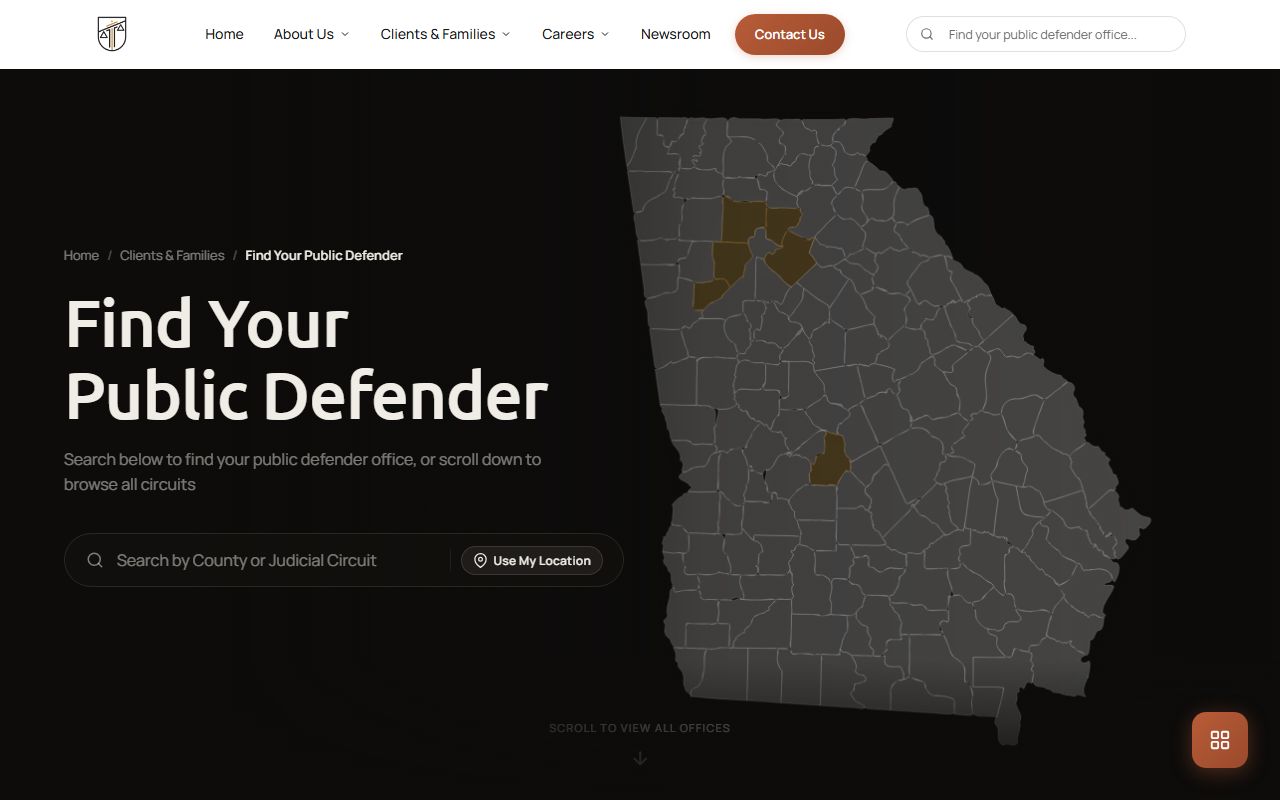
Defense counsel information helps identify case participants, but public copy requests still route to the court custodian rather than to an attorney's office.
Federal Criminal Records
Hart County state criminal court records are separate from federal criminal cases. Federal matters tied to Hart County route through the U.S. District Court for the Middle District of Georgia rather than the Hart County Clerk of Superior Court. The federal system uses CM/ECF and PACER for electronic case access. State charges, county jail records, and Superior Court criminal files should not be confused with federal prosecutions.
The Middle District of Georgia CM/ECF login is for federal electronic filing and case access. PACER may be needed for federal case documents. State and local Hart County criminal court records remain with the Georgia court or local custodian that created them.
Use the federal system only when the case is a federal prosecution or federal court filing, not for ordinary Hart County Superior Court criminal cases.
Background Check Limits
Criminal court records can be useful for personal research, case follow-up, or confirming a court outcome, but they are not a substitute for a legally compliant background check. Consumer, employment, tenant, insurance, and credit decisions may trigger federal and state screening rules. A court docket can also be incomplete if a record is sealed, restricted, pending, redacted, or not yet updated.
Important: Do not use casual court lookups as FCRA-regulated consumer reports for employment, housing, credit, or insurance decisions.
Restricted Hart Criminal Records
Juvenile cases, sealed files, mental-health records, adoption records, protected personal information, and some law-enforcement details are restricted or redacted. Georgia's record-restriction process can also limit public access to eligible criminal-history entries. A person seeking restriction should gather the arrest date, agency, charge, court, disposition, and case number before contacting the arresting agency, court, or proper state process.
In Hart County, that may require more than one office. The Sheriff's Office can help with booking or law-enforcement records. Magistrate Court may hold front-end warrant or bond records. The Clerk of Superior Court holds Superior Court criminal files. The court's final disposition is often the key document for proving whether a charge was dismissed, reduced, convicted, or otherwise resolved.